
Why we built Iris

The Problem
Iris was inspired by observations that I made working with technical clients across many different industries as an innovation consultant. That problem is that many professionals in industry are simply not aware of what's going on or what's possible in their domain. As we become engrossed in our own work, we can actually find ourselves falling behind.
Why this really matters
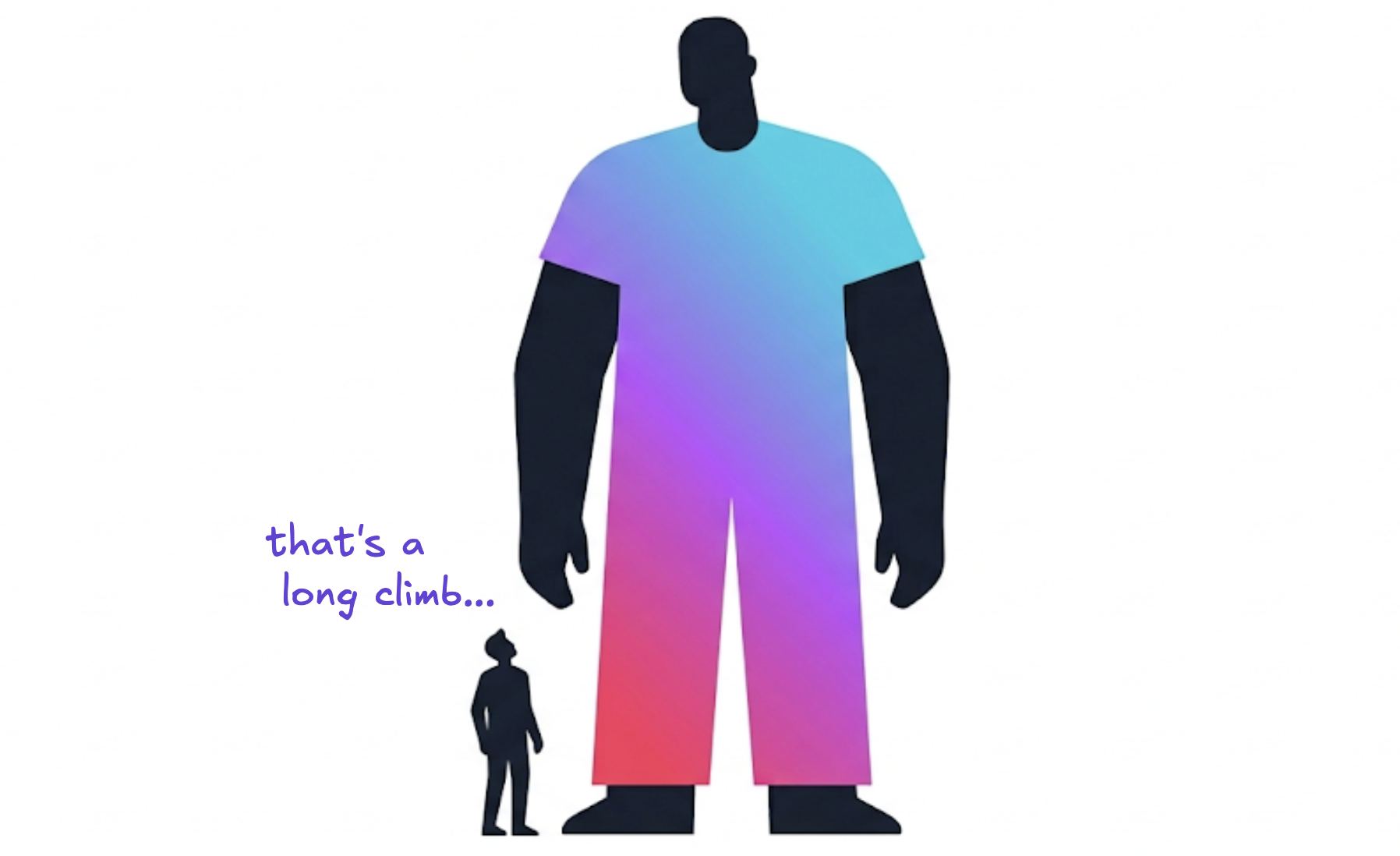
Human progress depends on us innovating, to 'stand on the shoulders of giants' and build upon the work of others, but for us to push the frontier of technology we must first be able to reach it.
If we have talented researchers, scientists and engineers fall behind the frontier, then the value of their contributions is reduced to playing catchup, often without knowing about it.

Why is this happening?
As the rate of technology development accelerates to dizzying speeds, it's harder to know where to look, what to look for and we may increasingly feel like we need to sprint to keep up.
Now it is absolutely possible to stay up to date! You can constantly read academic journals, go to every networking event, and regularly speak to industry leaders. But if you're reading this far, then you might agree that this is hard. It's hard to know where to look, it's hard to diligently stick to doing it and it's a highly inefficient to do in practise. At Iris, we would rather innovators spent their time innovating, not searching in the dark for the things that they might miss.
And this problem is getting worse every year. Every year, human knowledge output rate increases, and the climb to the top of the giants shoulders gets a little bit longer.
Why Iris Exists
Iris exists to solve these problems, with the ultimate objective of helping humanity continue to innovate.
Iris's functional objective is to reduce the friction of keeping industry professionals at the frontier, to maximise signal-to-noise and give people what they need to know as efficiently as possible at the correct intervals.
The bigger picture
Human cognitive capacity hasn't changed. We still process information at roughly the same rate we always have. Though the volume that we're expected to stay on top of has grown by orders of magnitude and currently, humans are still driving innovation activities across most industries.
Additionally, when it comes to the science of innovation itself, much comes down to serendipity, but serendipity alone is not enough if you are not ready when the opportunity presents itself. By keeping specialists at the state of the art, they are primed for when those connections occur and this allows innovations to occur where they otherwise may not have.
If we're serious about scientific and technical progress, if we believe that having talented people working at the frontier matters, then finding better ways to get the right information to the right people is a problem worth solving.

Iris is being developed in London, UK.
This article was written by a human.